
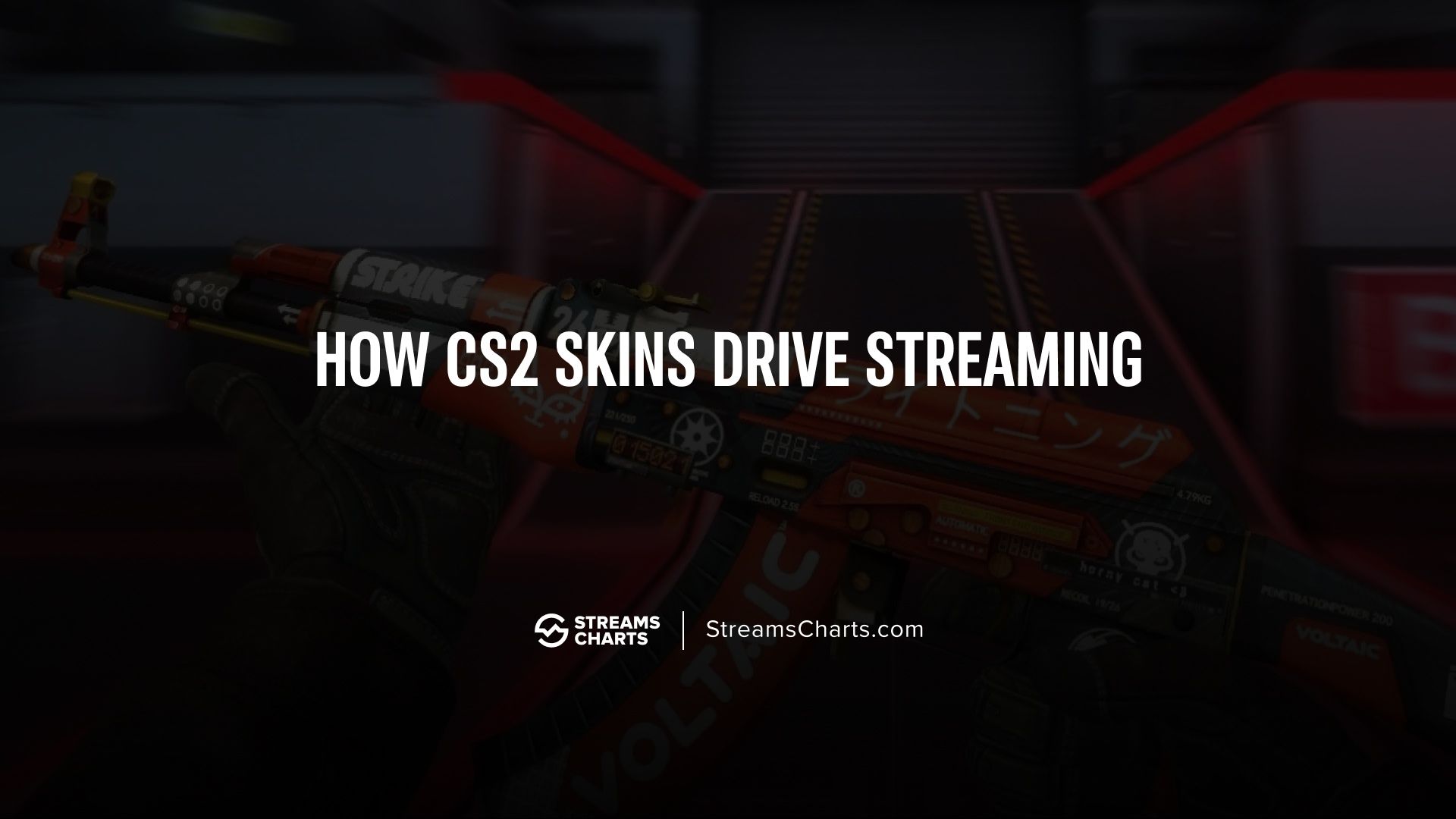
The Counter-Strike 2 (CS2) skin market hit $4.2 billion in trading volume in 2025, a 20% increase year on year. What started as cosmetic weapon skins in Counter-Strike: Global Offensive (CS:GO) has turned into a market where rare knives, AK-47 skins and limited edition stickers trade for hundreds or thousands of dollars.
The skin economy now shapes streaming content, player behaviour and how studios monetize competitive shooters. Here is how it works and why it matters.
How big is the CS2 skin market in 2026?
CS2 skins are cosmetic items used to customise weapons, gloves, agents and stickers. Players obtain them by opening cases with keys purchased from Valve. Skins are traded on the Steam Community Market and third-party platforms like SkinRadar.
About 10 million people actively use the marketplace, and total market capitalization touched $8 billion in early 2026 before volatility hit.
Skins like the AWP Dragon Lore and AK-47 Wild Lotus sell for five and six figures. Rare stickers from Katowice 2014, particularly the Titan and iBUYPOWER holos, have sold for over $100,000 each.
Cases, however, are still the main way a player can enter the market. Releases like the Fever Case or Kilowatt Case drive hype, while older discontinued cases appreciate steadily. However, the market is volatile. The market is often triggered by Valve updates, regulatory scrutiny, or broader economic sentiments.
The economy’s resilience stems from real-world factors, including a growing global player base, Chinese trading communities on platforms like Buff, 163, and institutional-level flips of million-dollar crafts. It is no longer “just Pixels,” it is an alternative asset class with supply constraints baked into Valve's drop rates and trade-up mechanics.
Why do CS2 skin unboxings pull so many viewers?
Twitch and YouTube have capitalised on the skin economy’s built-in drama. CS2 remains one of the most-watched esports titles on Esports Charts, and skin content drives a large share of non-competitive viewership. Case unboxing mimics slot-machine mechanics: spend $2-3 per key, spin for a potential knife or covert skin worth thousands and react live. The odds are poor, worse than many casino games in expected value. But the possibility of a high-value pull keeps viewers watching.
There are several formats that stand out as the most popular ones. These include:
1. Mass Unboxings: Creators open hundreds of cases; sometimes, the cases are valued in millions. For every case, you have to face challenges or new-release marathons.
2. Skin Trading: Also known as investment shows, Streamers break down market trends, float values, and pattern seeds.
3. Giveaways and Battles: Another popular format is the giveaways and battles. Under these, the streamers usually perform high-stakes skin giveaways.
4. Reaction Content: This is one of the most loved and popular formats. Viral clips of $10,000+ knife pulls or rare sticker crafts.
This content thrives because it blends gambling thrills, community interaction, and financial speculation. It does not require viewers to speed, though many do spend. Esports pros like s1mple or Shroud occasionally dip into skins during gameplay streams, but dedicated skin creators dominate the niche.
What are the risks and regulatory concerns around CS2 skins?
The CS2 skin economy has made it easier for players to think like investors. They have started treating rare items like stocks. Thus, buying and selling them results in profit. It has also developed an alternate market for streamers to create content about market pricing, trends and trading tips.
The system has drawn comparisons to gambling and raised concerns with regulators over the years. As Counter-Strike continues to grow, the skin economy is expected to follow. The player base keeps expanding, new skins are added with each operation and digital items are becoming more widely accepted as tradeable assets.
Streamers will keep evolving the format. For platforms, the takeaway is clear: skins turned a competitive shooter into a spectator sport with financial stakes, and unboxing streams are not going anywhere.
What does the CS2 skin economy mean for streaming going forward?
The CS2 skin economy has grown from simple cosmetic items into a market with $4.2 billion in annual trading volume. Its value comes from scarcity, player demand and a global community willing to pay real money for items that have no gameplay function.
The skin economy has reshaped streaming on Twitch, YouTube and beyond. What once centred on competitive gameplay now includes case unboxings, skin trading sessions, market analysis and high-stakes giveaways.
Subscribe to our newsletter.
Latest streaming statistics and analytics news in weekly format!
Subscribe