
Manufactured virality: how paid clipping networks became streamer marketing’s hidden engine
Over the past few years, clipping has moved from fan culture into something much bigger: a paid distribution system for livestreaming personalities. What once looked like viewers casually reposting funny or dramatic moments is now, in many cases, a structured marketing operation built around volume, speed and algorithmic reach.
Recent creator disclosures have made the scale harder to ignore. Rangesh “N3on” Mutama recently said he spent $1.4 million over five weeks to maintain his social media dominance, while other high-profile streamers have reportedly spent hundreds of thousands of dollars per month on networks of editors and clip accounts. These numbers suggest a broader shift in creator marketing: for the most attention-driven streamers, short-form clipping is no longer a side effect of popularity, but one of the main tools used to manufacture it.
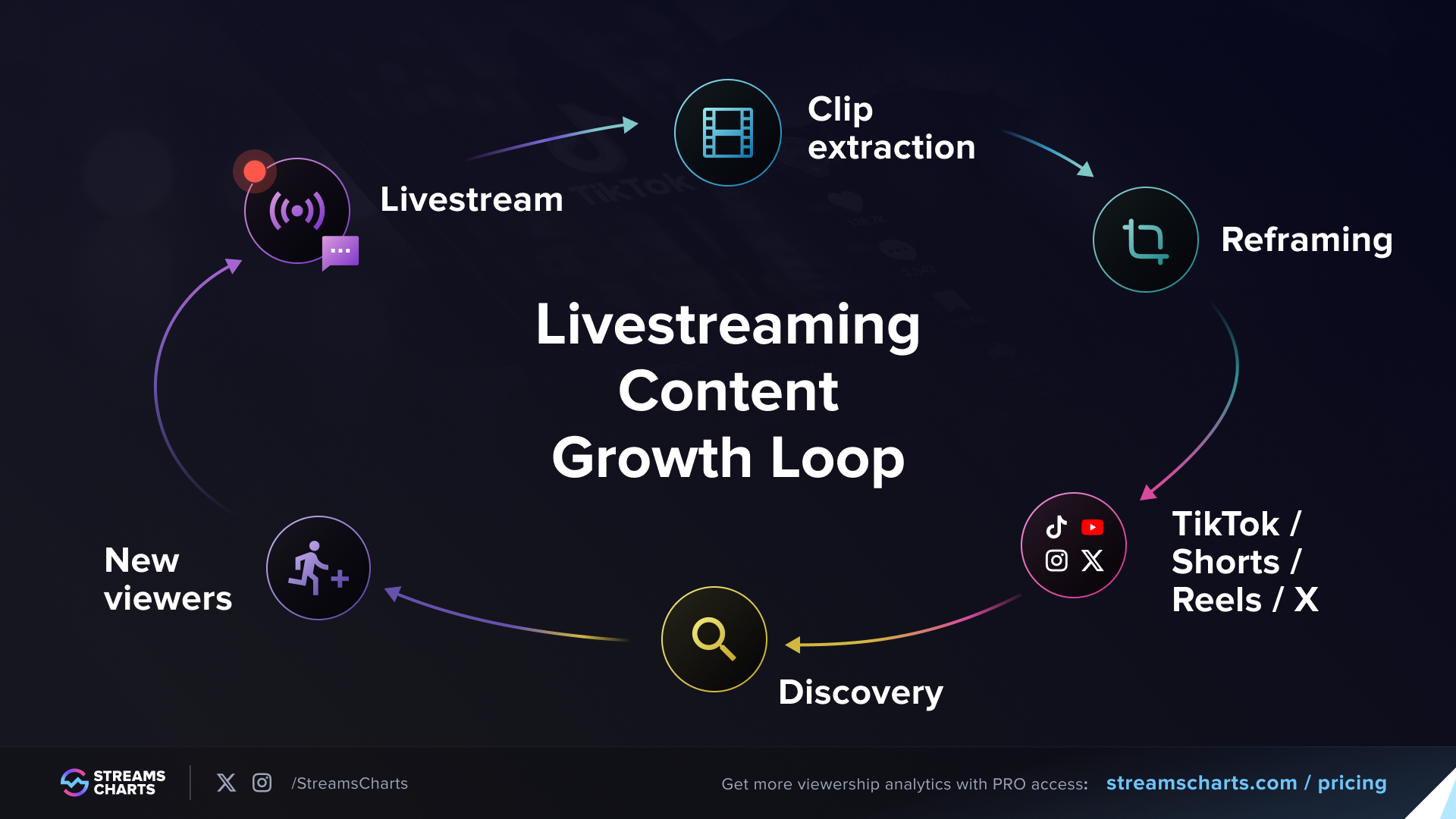
The model works because paid clipping sits between categories. It can look like fandom from the outside, but operate like performance marketing from the inside. Streamers or their teams fund networks of editors, those editors repackage livestream moments for TikTok, YouTube Shorts, Instagram Reels and X, and audiences encounter the result as if it were organic internet culture.
Why clips became the new discovery layer
Paid clipping exists because the old discovery path for online creators has weakened. Viewers rarely find new streamers by browsing long broadcasts or searching through channels. Discovery now happens through feeds, recommendations and short-form platforms, where users are served fragments before they ever choose to follow a creator directly.
Short-form video is especially powerful in this ecosystem. A four-hour stream is difficult to sell to a new viewer, but a 15-second outburst, argument, joke, gameplay moment or celebrity interaction can travel across platforms instantly. For streamers, each clip becomes a small entry point into a much larger content funnel.
VTuber MichiMochievee framed this shift in simple audience terms: viewers come to livestreams for a specific “vibe,” a hangout or a game they care about, but once the stream ends, “not a lot of people would actively look to interact with a video they cannot participate in.” In that environment, she argued, short-form clips have become “one of the most efficient ways” for streamers to reach a wider audience.
That has changed the value of livestream content. A stream is no longer only a live event, but also raw material. Every broadcast can be broken down into dozens or hundreds of clips, each one tested against the algorithm as a potential discovery asset. The more clips a creator can produce, the more chances they have to appear in front of new audiences.
Ben "CohhCarnage" Cassell described the same logic as a problem of reach. “Your stream is the lure. Your poles are the various multimedia sites,” he said, arguing that creators now have to place their content in front of as many relevant audiences as possible.
This is why clipping has become industrialized. The value is not in one viral moment, but in the constant pressure applied to recommendation systems. A creator who can flood short-form platforms with clips from multiple accounts gains a type of visibility that a single official channel cannot easily match.
From fan edits to paid distribution networks
Clipping began as a community habit. Fans cut memorable moments from Twitch, YouTube and Kick broadcasts because they wanted to share jokes, highlights, drama or skill moments with other viewers. These clips helped creators grow, but the process was mostly informal and community-driven.
The shift came when creators and their teams realized that clipping could be treated as a performance-marketing system. Instead of waiting for fans to repost highlights naturally, creators could pay editors directly for reach. Some offered fixed rates per million views. Others built Discord-based bounty systems where editors competed to generate the highest-performing clips. Over time, the fan page started to resemble a contractor.

Jason “PirateSoftware" Hall was even more direct about the marketing nature of the model: “Paid distribution is just having a PR agency under a different name.” His point captures why clipping is increasingly difficult to treat as simple fan activity once money, strategy and repeatable distribution enter the process.
The practice has since developed into several overlapping models. Some clipping remains purely organic, driven by fans with no formal relationship to the creator. Some is semi-professional, with editors earning performance-based payouts. Some campaigns are actively managed by creators, agencies or third-party platforms. At the high end, clipping can become a coordinated distribution network, with creators paying large pools of editors and semi-anonymous accounts to push short-form content across multiple platforms.
This distinction matters. Not every clip is an ad, and not every fan account is part of a paid campaign. The issue is that the viewer often cannot tell the difference. A clip may look like spontaneous fan enthusiasm while actually being part of a funded distribution strategy.
That ambiguity is the core of clipping’s power. The format borrows the trust and casualness of fandom, then uses it for paid reach.
The machinery of paid presence
Professional clipping usually follows a simple but highly scalable process. Editors monitor long livestreams, identify moments with high retention potential, then reframe them for short-form feeds. Emotional reactions, confrontations, controversial comments, awkward encounters, high-stakes gameplay and celebrity interactions are especially valuable because they can grab attention without much context.
That logic can also change how creators think about the live show itself. Bruno "impaKt" Moutinho said he understands the need to use Instagram, Shorts and TikTok for exposure, but warned that constantly chasing viral moments can come at a cost: “I feel like my content would start to feel a bit soulless if I just ended up chasing the next crazy clip all the time.”
The original livestream moment is then reshaped using platform-native techniques: bold captions, jump cuts, reaction overlays, split screens, zooms, trending sounds and provocative titles. A moment that lasted several minutes on stream becomes a compact piece of feed-native content designed to stop scrolling.
In some cases, clips are posted by official or clearly affiliated accounts. In many others, they appear through secondary pages with names and branding that resemble fan accounts. These pages can build their own followings, giving creators a distributed presence across the internet without making every impression look like a formal ad placement.
The result is a kind of phantom visibility. A streamer appears to be everywhere at once, not because one account is dominating the conversation, but because dozens or hundreds of smaller accounts are repeatedly inserting them into recommendation feeds. To the viewer, this can feel like organic momentum: everyone seems to be talking about the same creator. Behind the scenes, that momentum may be partly funded and coordinated.
The business behind the clips
The financial structure of paid clipping varies widely. Some editors are paid fixed fees. Others earn bonuses based on views. Some work through private Discord servers, while others use creator-economy platforms or clipping marketplaces that track performance and manage payouts.
Reports around major creators show how large the system has become. Andrey “Mellstroy” Burim helped popularize the bounty-style model by offering payouts for clips that reached major view milestones across TikTok, Instagram Reels and YouTube Shorts. Paul “Ice Poseidon” Denino’s dispute with editors over alleged unpaid clipping work showed another side of the model: when informal creator labor becomes expensive, the lack of clear contracts can quickly turn into public conflict. More recent reports about creators spending hundreds of thousands of dollars per month suggest that clipping has become a serious budget line for some streamers, not just a growth hack.
Platforms and agencies have also begun formalizing the practice. Services now exist to help creators recruit editors, distribute clips, track views and manage payments. This has pushed clipping closer to a recognizable marketing service, even while much of the activity still operates through informal relationships and semi-anonymous accounts.
The contradiction is hard to miss. Paid clipping is becoming more professional as a business, but it often still presents itself through the language and aesthetics of fan culture.
The transparency problem
The most important issue around paid clipping is not that it exists. Creators have always promoted themselves, and repackaging content for different platforms is a normal part of media distribution. The real issue is transparency.
When a creator pays editors or clip accounts to distribute content, the audience may not know that the exposure is commercially motivated. A viewer may interpret repeated clips from different accounts as evidence of organic cultural relevance, even when the visibility is partly the result of paid coordination.
This creates a difficult disclosure question. Traditional advertising usually has clearer labels: sponsored posts, paid promotions, branded content, ad buys. Paid clipping is harder to classify. The clipper may not be endorsing a separate product in the traditional sense. They may be reposting the creator’s own content, amplifying a personality, promoting a livestream ecosystem or driving attention toward subscriptions, merchandise, gambling streams, music releases or other monetized activity.
CohhCarnage drew a clear line around commercial promotion: “If a product is involved and money is changing hands, disclosure needs to happen.” For him, the standard is straightforward even if the mechanics of clipping are not: “Transparency is key.”
In the United States and other markets, advertising rules generally become relevant when there is a material relationship between the promoter and the party benefiting from the promotion. Paid clipping can therefore raise disclosure and consumer-transparency risks, especially when clips are presented as organic fan content. But the practice does not fit neatly into older advertising categories, which is exactly why it has been able to grow so quickly.
Many clippers operate as informal contractors without stable agreements, predictable payment terms or clear dispute-resolution mechanisms. PirateSoftware emphasized the value of editors more directly, saying streamers “make dramatically less without editors and other creatives,” and that compensation should reflect the importance of that work. View counts can be difficult to verify. Platforms can remove clips or accounts without warning. Creators can dispute whether a clip “deserved” payment. Editors can inflate performance or spam low-quality uploads. In a market built around speed and volume, trust often depends on private arrangements rather than formal standards.
This is the real gray zone: not a simple story of illegality, but a fast-growing marketing practice that has outpaced the norms used to govern advertising, labor and measurement.
What happens next
Paid clipping is likely to keep moving in two directions at once.
On one side, the practice will become more institutional. Agencies, management companies and creator platforms will continue turning clipping into a formal service. Larger creators will demand better reporting, better payment systems and more predictable campaign management. Brands working with streamers may also start treating clipping as part of broader distribution packages, especially when they want short-form reach around live events, launches or influencer activations.
On the other side, the most aggressive forms of clipping will likely remain semi-informal. The model’s effectiveness depends partly on looking organic. A fully disclosed, obviously coordinated clipping campaign may still work, but it loses some of the cultural camouflage that makes fan-style distribution so powerful. Many creators will therefore have an incentive to keep the machinery visible enough to function, but hidden enough to feel natural.
Regulatory and platform pressure could also increase. If paid clipping becomes more common in areas tied to gambling, financial products, politics, health claims or youth-targeted advertising, disclosure questions will become harder to ignore. Platforms may also introduce stricter rules for coordinated reposting, duplicated content or undisclosed paid amplification. But enforcement will be difficult because clipping networks are decentralized, fast-moving and easy to rebuild under new accounts.
The most likely future is not a clean crackdown or a full normalization. Paid clipping will probably settle into a hybrid state: partly professionalized, partly hidden, partly tolerated and constantly adapting to whatever platforms reward next.
Paid clipping is unlikely to disappear because it solves too many problems at once: creators get reach, platforms get engagement, clippers get a performance-based income stream, and audiences get a constant supply of feed-native entertainment. The unresolved question is whether the industry can make that system more transparent without destroying the very illusion that makes it work.
Subscribe to our newsletter.
Latest streaming statistics and analytics news in weekly format!
Subscribe


