
AI slop vs. photorealism: Why the DLSS 5 announcement sparked backlash within livestreaming community
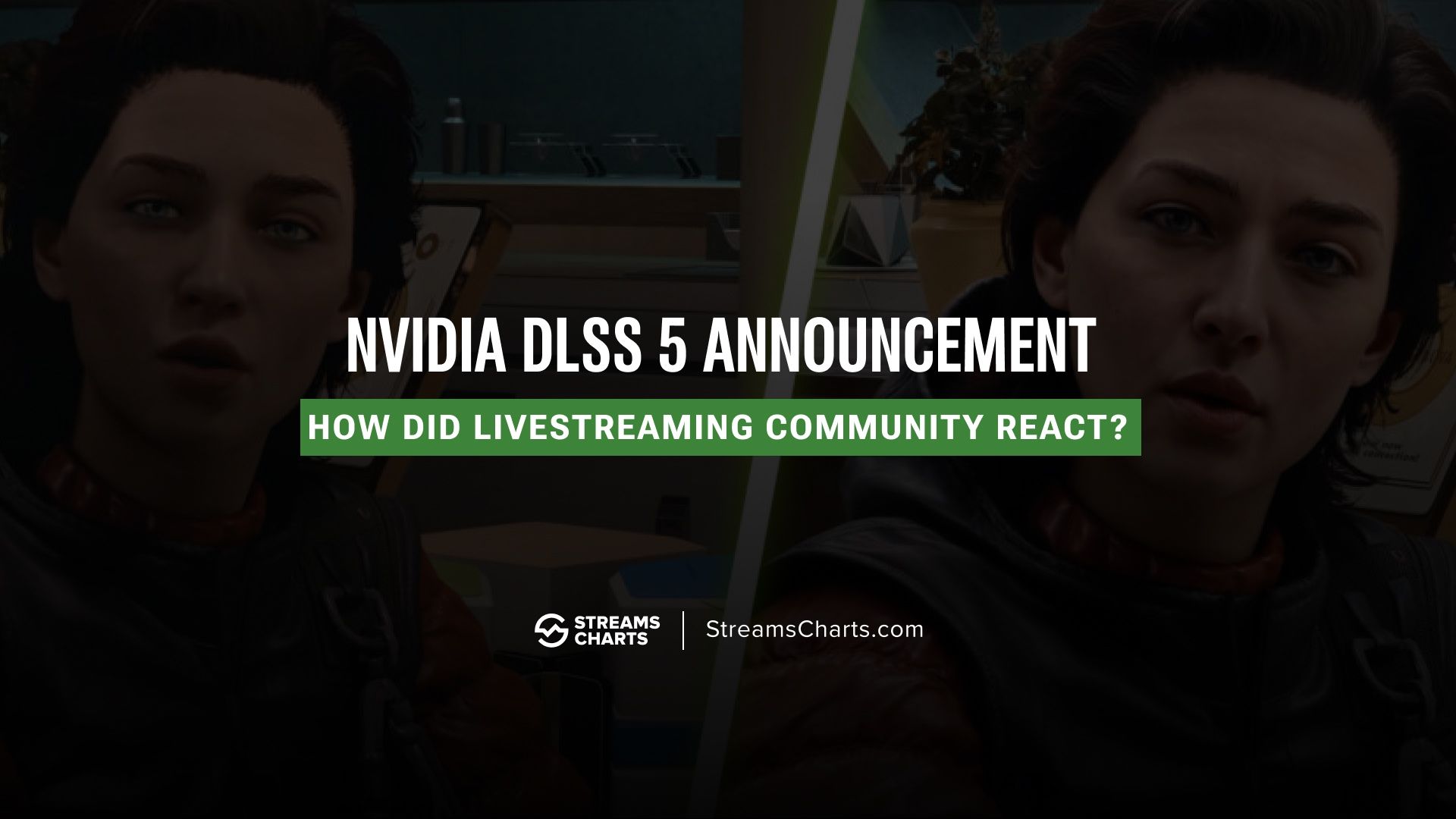
Nvidia recently unveiled DLSS 5, the latest iteration of its upscaling technology. The announcement generated significant discussion across livestreaming platforms, highlighting a clear divide between official industry optimism and scepticism from the viewing public. Early community metrics indicate a predominantly critical response regarding the heavy reliance on generative artificial intelligence, specifically concerning visual artifacts and the distortion of original art styles. Nvidia has since acknowledged the backlash, issuing statements to clarify the technical foundation of the new update.
Deep Learning Super Sampling (DLSS) is Nvidia's proprietary rendering technology designed to improve frame rates by generating pixels using artificial intelligence. The newly announced DLSS 5 introduces a more aggressive generative AI model that directly adds photorealistic lighting and materials to pixels, moving beyond standard upscaling or frame generation.
According to Streams Charts estimates, out of approximately 12,300 early-tracked mentions across Twitch, Kick and YouTube, around 15% of audience reactions were distinctly negative. Viewers expressed conceptual opposition to AI-generated frames, frequently labeling the technology as "AI slop". The criticism focused on perceived graphical artifacts, such as ghosting in motion and overall image blurring. Many commenters argued that the aggressive AI filtering ruins the original artistic direction intended by game developers. Viewers specifically likened the technology to "yassification", a slang term referring to the process of extreme photo editing using AI-powered beauty filters. By artificially smoothing out textures and altering character features (with fans frequently citing unnatural facial changes to characters like Grace in Resident Evil 9) the community expressed concern that the generated pixels overwrite the intended atmosphere with a generic, plastic aesthetic.

The official industry response contrasts sharply with the live-stream sentiment. Nvidia promptly addressed the criticism, stating that DLSS 5 is a complex rendering solution rather than a simple AI filter. Key industry figures voiced support for the technology. According to community discussions, Bethesda's Todd Howard praised the system's integration with Starfield. Technology review outlet Digital Foundry released exclusive gameplay footage demonstrating the new capabilities.
As Streams Charts data reveals, about 10% of the livestreaming reactions aligned with the stakeholders' views. These users commended the update for achieving near-photorealism. Favorable comments specifically highlighted the dramatic improvements in lighting and material rendering observed in titles like Starfield and Minecraft. Viewers responding positively frequently cited the Digital Foundry technical breakdowns as proof of the feature's viability.
Understanding audience sentiment and market trends requires comprehensive analytics. Streams Charts provides tailored research and custom reports designed to support strategic decision-making for brands, agencies and publishers. Whether evaluating a recent product launch or optimizing an upcoming marketing campaign, explore our predefined analytics or request a custom report tailored to your exact business requirements at Streams Charts Researches.
The largest portion of the data, comprising 75% of all reactions, consisted of typical live-stream behavior devoid of qualitative judgment. The majority of viewers engaged in repetitive emote spam, comparing "DLSS 5 ON" and "DLSS 5 OFF" variations of streamer-specific emojis. Other neutral activity included sharing links to official press releases and asking technical questions regarding hardware compatibility, specifically concerning unreleased graphics cards like the RTX 5060.
The debut of DLSS 5 illustrates a clear disconnect between Nvidia's technological ambitions and the current expectations of the gaming audience. The industry views the aggressive implementation of generative AI as a step toward photorealism. The streaming community remains highly skeptical, prioritizing image stability and artistic intent over AI-driven enhancements.
Frequently Asked Questions (FAQ) About NVIDIA DLSS 5
What is NVIDIA DLSS 5?
DLSS 5 is a real-time neural rendering model introduced by Nvidia. Previous iterations of Deep Learning Super Sampling focused primarily on resolution upscaling and frame generation. The fifth version employs generative AI to analyze a game's color and motion vectors, subsequently infusing the scene with photorealistic lighting, material depth, and complex effects like subsurface skin scattering in real time. Nvidia CEO Jensen Huang has referred to this technology as the "GPT moment for graphics".
When is the DLSS 5 release date?
Nvidia has scheduled the official launch of DLSS 5 for the fall of 2026.
Which graphics cards (GPUs) are compatible with DLSS 5?
The technology is designed to coincide with the rollout of the GeForce RTX 50-series architecture. During the initial GTC 2026 demonstration, the DLSS 5 preview ran on two GeForce RTX 5090 graphics cards, one dedicated to standard rendering and the other to the AI model. Nvidia has confirmed that the final consumer release will be optimized to run on a single RTX 50-series GPU.
Does DLSS 5 override the original artistic intent of game developers?
The potential for AI to alter original character models and environments is the primary source of community backlash. Nvidia maintains that developers retain full creative control over the neural rendering process. Studios are provided with detailed parameters to adjust intensity, color grading, and masking, allowing them to dictate exactly how and where the photorealistic enhancements are applied.
Which games will support DLSS 5?
Several major publishers, including Bethesda, Capcom, and Ubisoft, have confirmed support for the technology. Announced titles integrating DLSS 5 include Starfield, Resident Evil Requiem, Hogwarts Legacy, Assassin's Creed Shadows and The Elder Scrolls IV: Oblivion Remastered. Developers have the option to implement the feature via the Nvidia Streamline SDK.
Subscribe to our newsletter.
Latest streaming statistics and analytics news in weekly format!
Subscribe