
Artemis II mission concludes as one of the most-watched events across streaming platforms
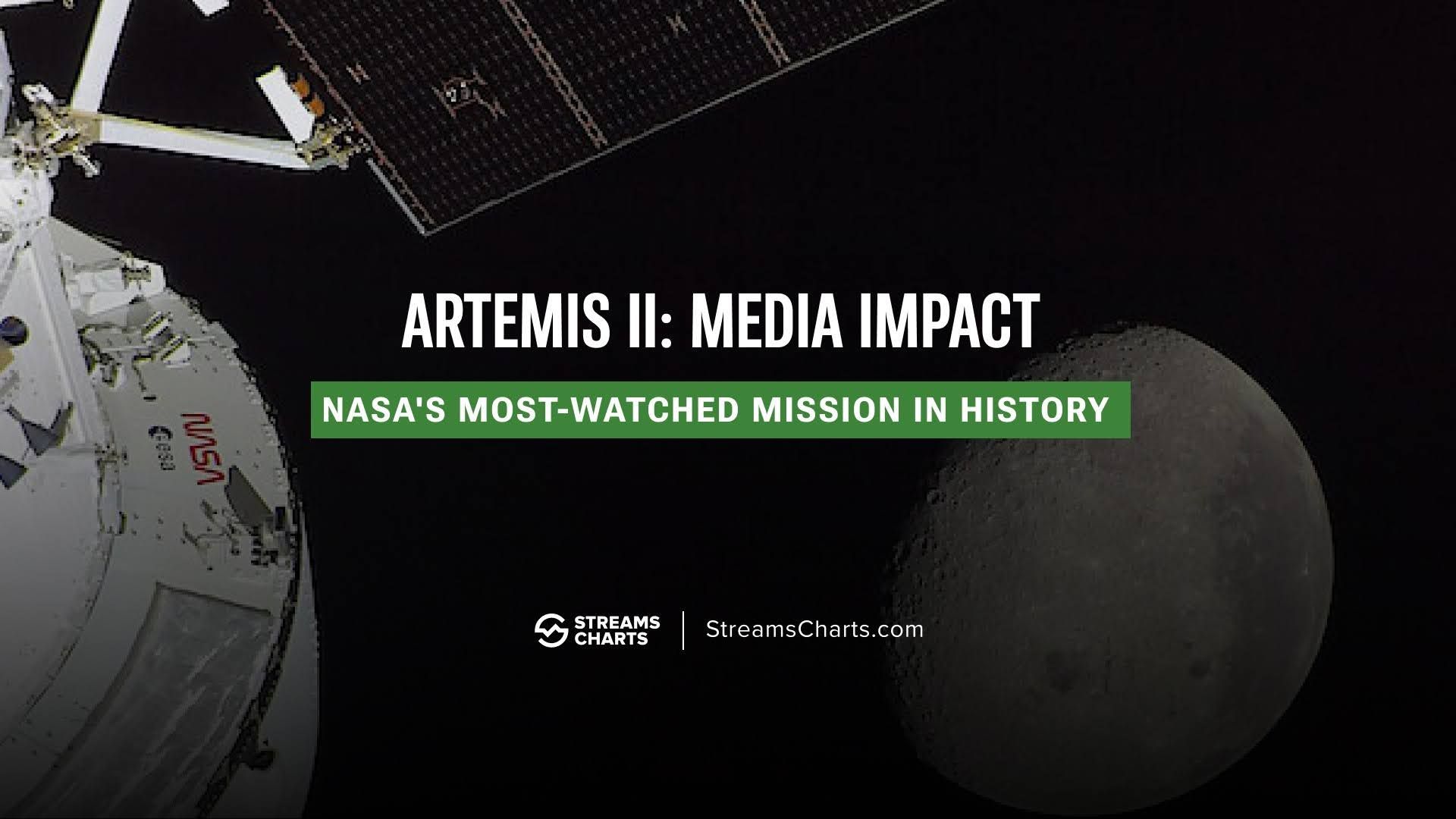
The Artemis II mission concluded today with the splashdown of the Orion capsule, completing a ten-day livestreamed event that ranked among the most-watched broadcasts across livestreaming platforms. At launch, the project drew more than 10 million concurrent viewers, placing it immediately among the top-tier space events ever livestreamed across digital platforms. Viewer interest remained steady throughout the mission, with global audiences following key milestones, from the record distance from Earth to orbital operations around the Moon.
The final descent and splashdown confirmed the scale of audience engagement the mission sustained across its full duration. The return broadcast attracted a combined 3,485,880 peak viewers on NASA’s YouTube and Twitch channels and further reinforced Artemis II as one of the largest livestreamed space events of 2026.
The event had a potential reach of over 14,500,000 viewers, slightly higher than the initial launch stream.

The Artemis II mission has officially concluded, marking the end of the most ambitious space journey of the 21st century. The Orion spacecraft, carrying its four-member crew, spent ten days in space and completed a historic lunar flyby. Launched on April 1, 2026, from the Kennedy Space Center, the mission signaled the first human return to the Moon's vicinity in over fifty years. The crew, which consisted of commander Reid Wiseman, pilot Victor Glover and mission specialists Christina Koch and Jeremy Hansen, became the first international team to travel beyond low Earth orbit.
How popular was the Artemis 2 launch?
The mission's launch demonstrated an unprecedented level of digital audience engagement. The aggregate peak viewership across all livestreaming services surpassed 10 million concurrent viewers, ranking the launch among the largest events in digital livestreaming history. The broadcast was carried not only by official NASA channels and state media but also by major U.S. media corporations and hundreds of independent influencers. The coverage reached far beyond North America; according to Streams Charts estimates, more than 600 unique channels worldwide tracked the SLS rocket’s ascent in real-time.
The primary phase of the expedition generated a series of major headlines that sustained public attention throughout the week. On April 6, the Orion crew set a new world record for the farthest distance traveled by a crewed spacecraft, reaching over 406,000 kilometers from Earth. During the flyby of the Moon's far side, the astronauts witnessed a rare total solar eclipse from a unique vantage point, broadcasting high-definition footage directly back to Earth. These deep-space transmissions ensured the mission remained viral on social platforms, maintaining high viewer retention between critical maneuvers.
The final milestone was Orion’s re-entry into Earth’s atmosphere and its subsequent splashdown in the Pacific Ocean off the coast of San Diego. Millions of people watched the complex technical descent and the recovery of the crew by the USS John P. Murtha in real-time. Such high viewership figures during the final stage confirm strong audience interest in the mission’s conclusion and reinforce Artemis II as one of the largest livestreamed events in the context of lunar mission coverage, with implications for how future missions may be presented on streaming platforms.
Subscribe to our newsletter.
Latest streaming statistics and analytics news in weekly format!
Subscribe